

The Hidden Leaders in Your Organization: Spotting Potential Beyond Titles

Organizations today face a paradox; often lamenting a “leadership gap” while overlooking capable leaders who are already in their midst. Too often, leadership potential is equated with job title, tenure, or charisma — leaving quieter, less visible contributors unnoticed. These hidden leaders, when identified and supported, can be the very individuals who drive innovation, foster collaboration, and stabilize culture during periods of change. For HR leaders and executives, learning to recognize leadership potential beyond formal authority is no longer optional — it is a strategic imperative (Charan et al., 2011)
Core Insights
1. Leadership ≠ Title
Traditional promotion pathways assume that seniority equals leadership. In reality, leadership is about influence, not position. Consider the team member who consistently mentors new hires, or the analyst who naturally rallies peers during projects. Neither may hold a managerial role, yet their actions reveal clear leadership capacity. Research supports this distinction: companies that recognize and develop leadership potential across levels are 2.4 times more likely to hit performance targets (McKinsey, 2023).
2. Spotting the Behaviors That Signal Potential
Hidden leaders demonstrate specific, observable behaviors that differ from raw performance alone. High performers excel in their individual tasks; high potentials create impact that ripples outward. Watch for:
- Proactive problem-solving: They anticipate challenges and mobilize resources before issues escalate.
- Peer influence: Others seek their input, even informally.
- Adaptive learning: They embrace new technologies, processes, or challenges quickly.
- Resilience under stress: They remain steady, modeling calm in uncertain times.
According to a Deloitte report, only 18% of companies believe they have a strong leadership pipeline — and much of that weakness stems from overlooking these very signals (Deloitte, 2023).
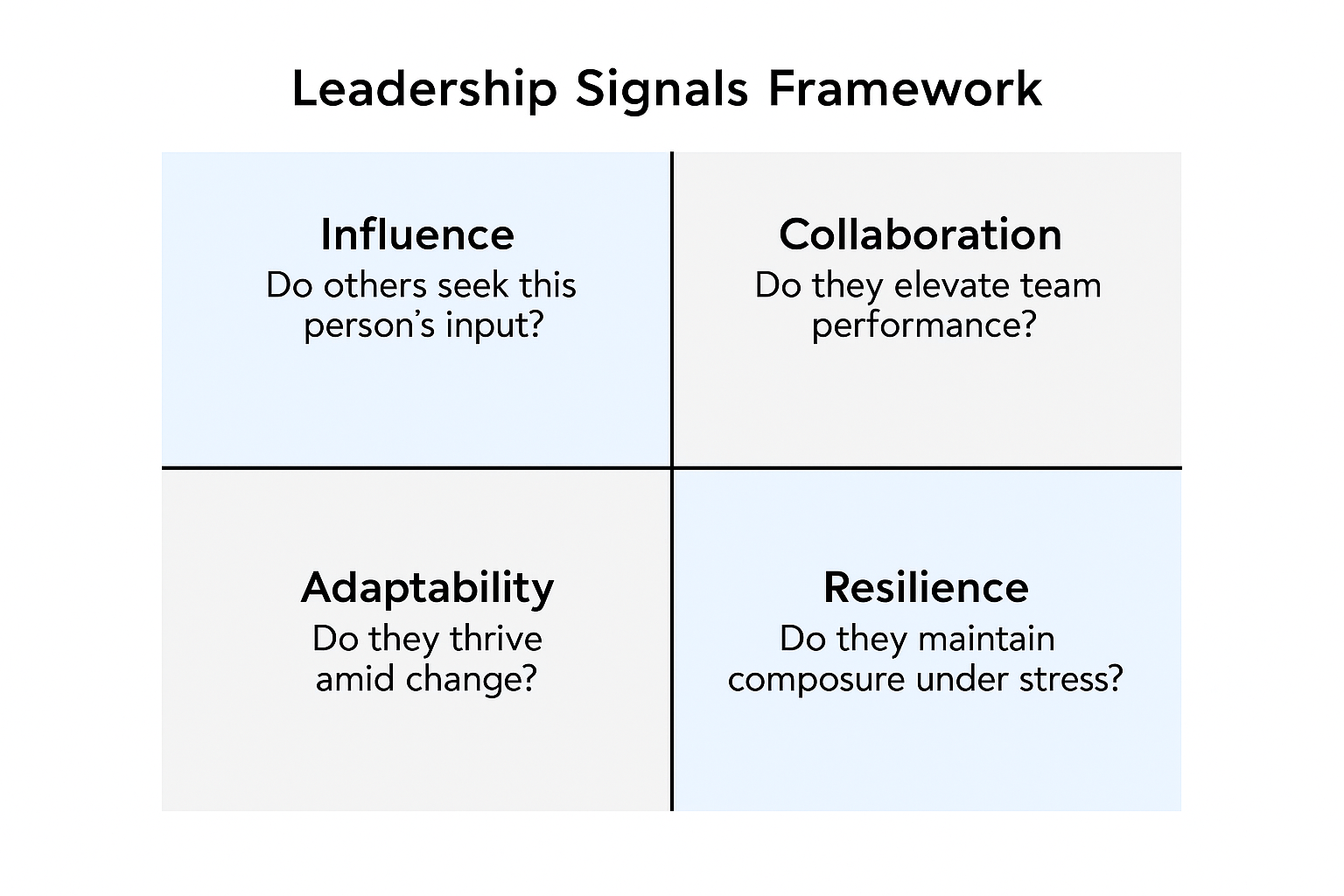
Figure 1. Leadership Signals Framework – Individuals who score “yes” across the quadrants should be flagged and considered for development opportunities.
- The Role of Culture and Psychological Safety
Hidden leaders thrive in environments where it is safe to speak up, take initiative, and experiment without fear of reprisal. Psychological safety acts as the soil in which hidden leadership emerges. Without it, potential remains buried — employees self-limit, fearing political fallout for stepping outside their formal lane. Organizations that reward curiosity, constructive dissent, and collaborative risk-taking see far more hidden leaders rise to the surface (Edmondson, 2018).
Case Vignette: A Tech Firm’s Hidden Leader Emerges
A mid-sized technology company faced chronic challenges onboarding new developers. Despite investing in structured training, retention rates remained low. A quiet but highly respected engineer, Maya, took it upon herself to mentor new hires informally. Her approach was practical — walking them through coding shortcuts, introducing them to unwritten cultural norms, and ensuring they had support during their first sprints.
Over time, turnover among new hires decreased by 25% in teams where Maya was involved. When leadership finally recognized her impact, they invited her to lead a cross-functional onboarding task force. Within a year, she was promoted into a formal leadership role, where her influence scaled company wide. Maya’s story underscores that leadership often reveals itself in small, consistent actions long before a promotion is granted.
- Audit Leadership Identification Practices
Review how your organization currently assesses potential. Are promotions tied only to tenure and output, or do you measure influence, collaboration, and adaptability? - Introduce a Leadership Signals Framework
Provide managers and HR partners with a rubric for spotting hidden leadership behaviors. Align it with organizational values so recognition is consistent. - Create Safe Testing Grounds
Pilot projects, cross-functional task forces, and innovation labs offer opportunities for hidden leaders to demonstrate capacity without requiring formal promotion first. - Communicate Upward Pathways
Once identified, hidden leaders must see that leadership growth is possible without waiting years for a vacancy. Offer targeted development opportunities — stretch assignments, mentorship, or rotational leadership roles.
The leaders your organization need for the future may already be on your payroll today — quietly influencing peers, driving results, and embodying values. By shifting the focus from title to talent, and from hierarchy to behavior, organizations not only close the leadership gap but also create a culture where leadership is everyone’s responsibility.
Learn how Seagles Consulting can help your organization identify and develop leaders. Contact us here.